Eṣù is Not the Devil: A 500-Year-Old Translation Error
Joan Ayebola
Author
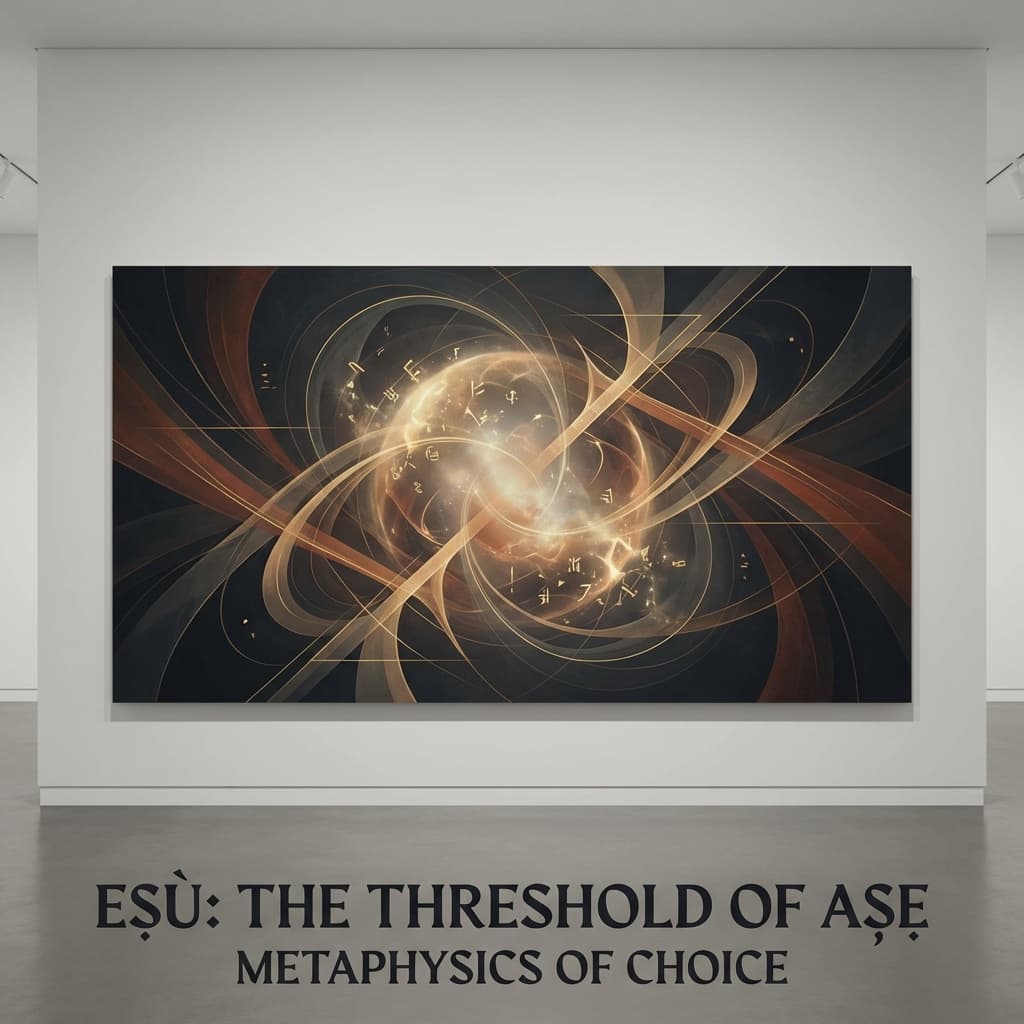
Àlàáfíà, my friend. To understand the Yorùbá worldview, we must first learn to see through the "colonial fog." When 19th-century explorers and linguists first encountered our culture, they brought with them a rigid, binary vocabulary. They looked at our complex spiritual science and tried to fit it into boxes that made sense to them.
The most significant casualty of this process was Èṣù.
During the early translation projects of the 1800s, colonial scholars were looking for a way to explain the concept of an "adversary" or "tempter." They saw Èṣù, a divinity who tests human character and sits at the crossroads of difficult choices, and they slapped a label on this energy that has stuck for over a century. They called Èṣù the "Devil."
"That Èṣù is a dark force working against humanity or trying to steal souls."
In the Odù Ifá, there is no figure that exists solely to do 'evil.' In our philosophy, the only thing that truly works against a person is their own Ìwà (character). The 'Devil' label was a tool of simplification; it allowed colonial observers to dismiss a sophisticated system of justice as mere 'demonology.'
In truth, Èṣù is the Agbọ̀nnìgbìn, the Divine Liaison. This is the force that ensures that when you put a positive intention out into the universe, it reaches its destination.Èṣù isn't trying to make you fall; this divinity is holding the mirror to see if you’re standing straight.
The Oríta: The Metaphysics of the Crossroads
In the sacred texts of the Odù Ifá, life is described as a series of Oríta, crossroads. These aren't just physical places where two roads meet; they are metaphysical "choice points." Every time you are faced with a decision, whether to be honest or deceitful, whether to be patient or reactive, you are standing at an Oríta.
Èṣù is the "Law of Entropy" and the "Law of Order" combined. Think of this divinity as the cosmic auditor.Èṣù doesn't create the choice for you, but ensures that the consequences of your choice are delivered with absolute precision. This is what we call Divine Justice.
In Yorùbá thought, the universe is a massive system of communication between Ayé (The Physical World) and Ọ̀run (The Spiritual Realm).Èṣù is the "cable" that connects them. This is the Linguist who translates human desire into divine action. If you approach the crossroads with arrogance, Èṣù’s energy will feel like a "trick" or a roadblock. If you approach with Ìwàpẹ̀lẹ́ (gentle character), Èṣù becomes your greatest advocate.
Lápéerẹ: The Standard of Excellence
While early outsiders were busy trying to find a name for "Evil," they completely overlooked one of the most profound titles for this divinity: Lápéerẹ.
In Yorùbá philosophy, Lápéerẹ translates to "The One who is a Worthy Example" or "The Pattern of Perfection." This title is a linguistic shield that shatters the colonial "devil" myth. You cannot logically call a being a "demon" if their ancient liturgical name literally means "The Exemplary One."
When we address this force as Lápéerẹ, we are acknowledging that Èṣù is the cosmic benchmark. This divinity does not act on whims or "tricks" for the sake of chaos; Èṣù acts to maintain the pattern of the universe. If your life feels out of alignment, Lápéerẹ is the one who signals that you have drifted from your own highest potential.
The Cosmic Protocol: Why We Honor the Messenger First
In the sacred science of Ìṣẹ̀ṣe, Èṣù is not acknowledged first out of a desire to appease a "trickster." It is a matter of Cosmic Protocol.
In the Odù Ifá Òṣé Tura, we find the definitive explanation for this practice. The narrative reveals a time when the sixteen male Òrìṣà attempted to organize the Earth while intentionally excluding the seventeenth Òrìṣà, Ọ̀ṣunthe leader of the Council of the Mothers (Àjẹ́). This was more than a social oversight; it was an attempt to run the universe through a patriarchal lens, ignoring the essential feminine Aṣẹ required for manifestation.
Because the law of balance was violated, Èṣù,acting as the divine enforcer of Ìwà (character) and the protector of the Mothers' rights refused to carry their prayers or sacrifices to the source. The communication lines of the universe were effectively cut. The rain ceased, the earth became barren, and all effort was met with stagnation.
It was only when the Òrìṣà humbled themselves, reconciled with the feminine power of Ọ̀ṣun, and acknowledged the necessity of the Mothers, that the energy of Èṣù Òṣé Tura was activated. By giving Èṣù the "rightful portion" which is the recognition of Reciprocity, the gates of the universe were reopened. This teaches us that Èṣù does not just carry messages; Èṣù enforces the integrity of the message.
Reclaiming the Iconography: The Ogo Èṣù
To look at an Ogo Èṣù (Èṣù’s sacred staff) is to see a map of the human mind. Often carved with two faces, it represents the dual nature of reality: the seen and the unseen, the beginning and the end.
When Westerners called Èṣù a "trickster," they missed the pedagogical beauty of these actions.Èṣù’s "tricks" are actually divine lessons. This divinity exposes the cracks in our character so we can mend them. If you think you are untouchable, Èṣù will provide a humble moment to remind you of your humanity. This is not malice; it is the highest form of Reciprocity.
Conclusion: Walking with the Inspector of Character
When we stop looking for a "villain" to blame for our hardships, we are forced to reclaim our own power. We realize that we are the primary architects of our path.
Èṣù is not your enemy. This divinity is the guardian of the threshold, the one who demands that you be honest with yourself before you ask the universe for a blessing.
Reflect & Connect
When was the last time you stood at a "crossroads" in your life? Did you blame "bad luck," or did you look at the choices that led you there? Viewing challenges as "Èṣù’s Test" shifts us from being victims of fate to being masters of our own character.